
Build a legal practice that runs on agents.

Law firms and in-house teams run their matters, contracts and agents on one platform. Every result comes back as a draft for a lawyer to accept.

A demonstration firm's workspace, as the product produced it: its Library, its agents, and three threads replayed from real runs. This copy can be clicked, not run.

Matter types, each with its phases, for these practice areas and twenty-one more.

One platform for legal work.

Firms run matters and the forms behind them; in-house teams run the contracts that arrive. Both work from the same documents, in the same account.

For law firms

Run every client matter on one platform, with your lawyers and the agents you build working from the same documents.

Request a demo
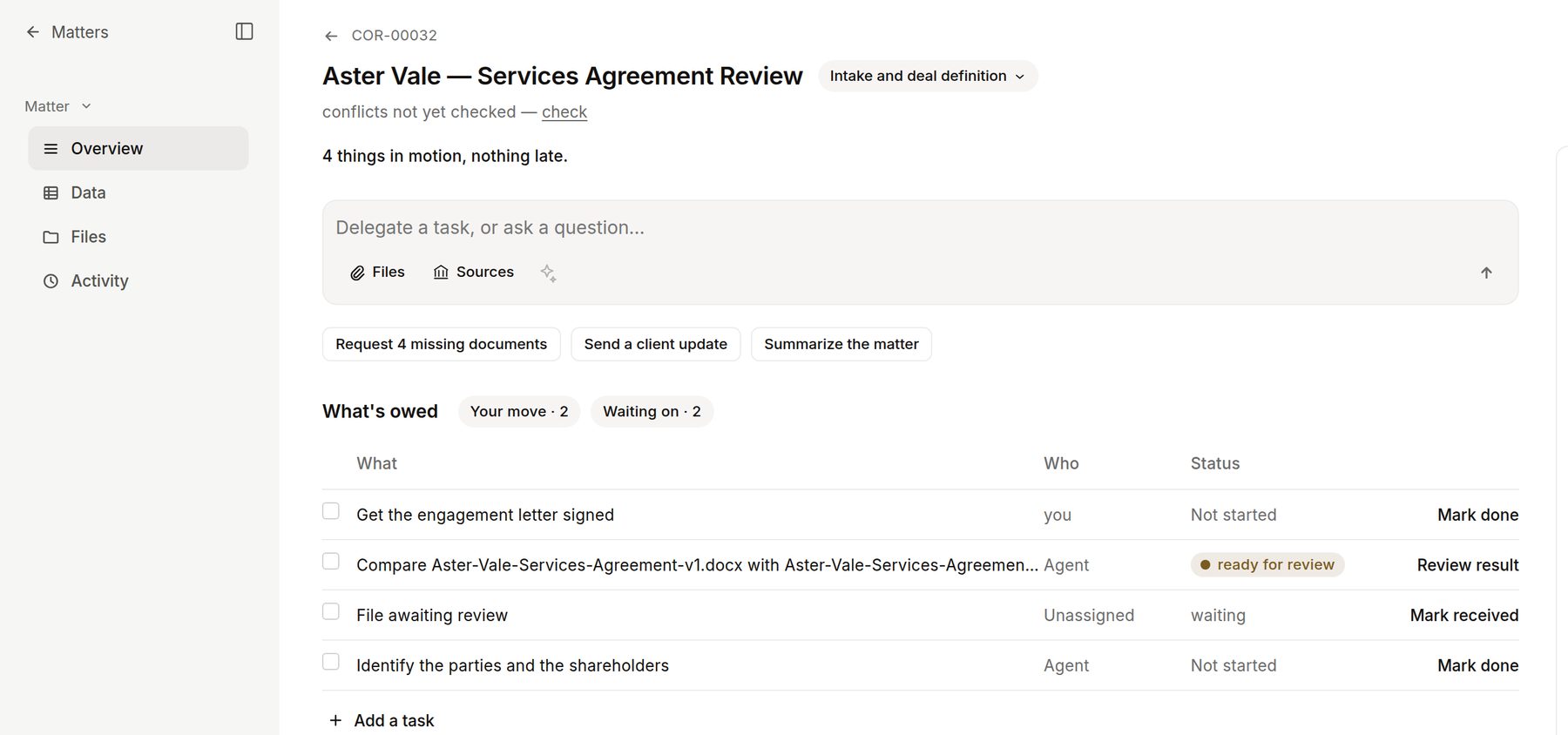

A matter on a demonstration firm: what is owed, who owes it, and the agents that work the matter.

For in-house teams

Every contract that reaches you, reviewed against your own playbook, and the repetitive work handed to agents you set up once.

Explore for in-house teams
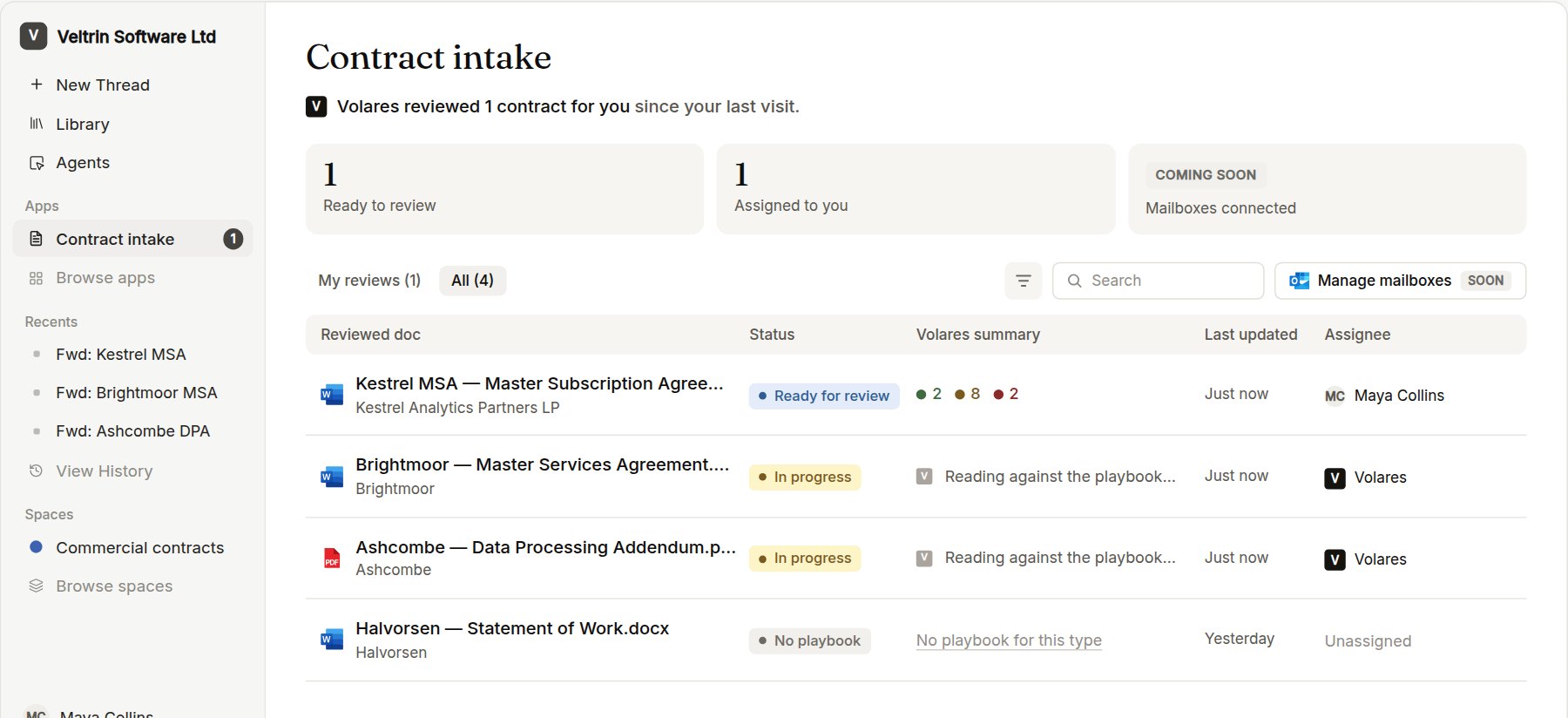
Contract intake for a demonstration company's legal team: one contract reviewed against its playbook with its verdict counts, two still being read, and one with no playbook for its type.

What you get.

It finds what you would look for, and drafts the fix.

A services agreement on a demonstration matter: two critical gaps and four risks found on arrival, each with the clause drafted to close it and the page it rests on.
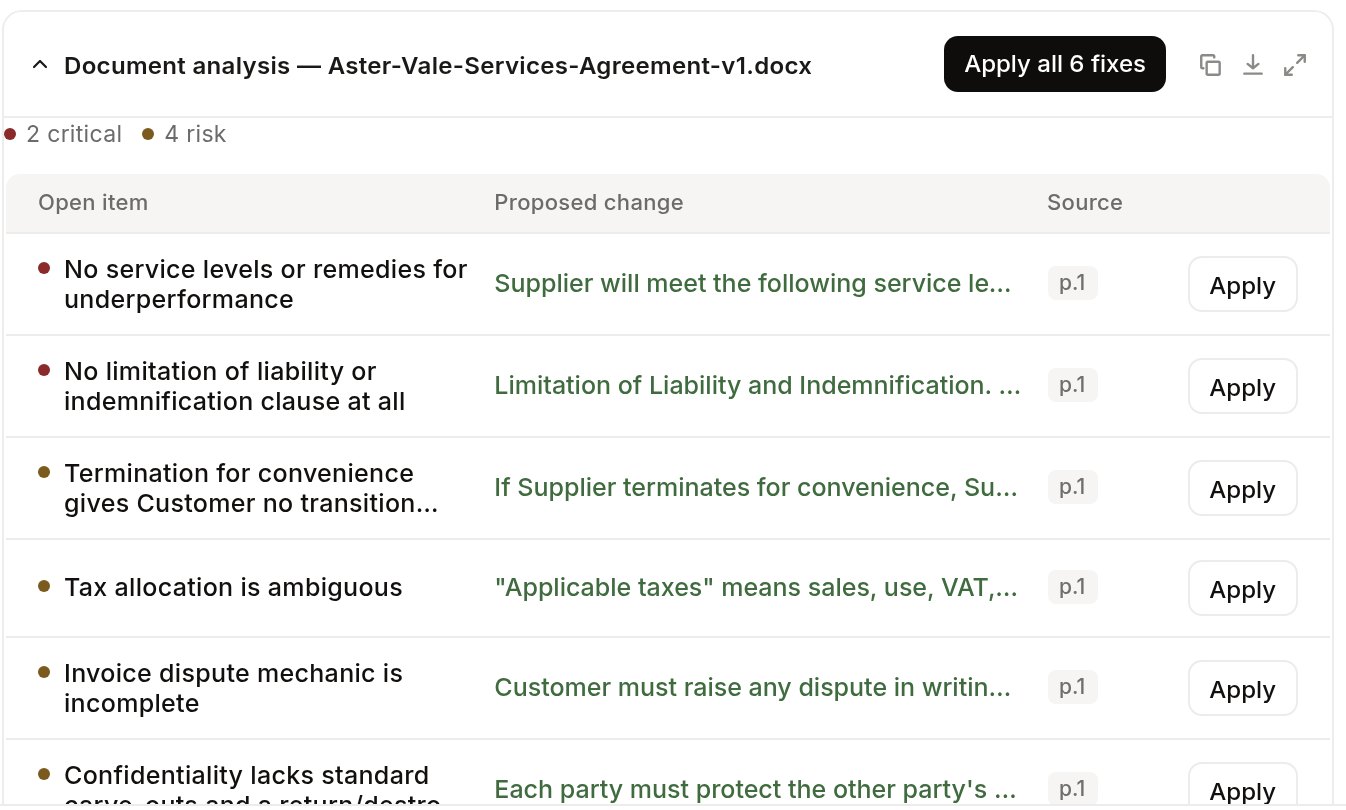
A document analysis on a demonstration matter: two critical gaps and four risks in a services agreement, each open item with the change drafted to close it, the page it rests on, and an Apply button.
  • Graded, so you read the worst firstEach open item is graded critical, risk or note.
  • Every finding cites its pageThe clause behind a finding is one click away, so you check the paper, not the summary.
  • It arrives by emailForward a thread to your intake address and a session opens on it, with the attachments already read. A reviewable document that arrives by intake email is queued for review on arrival.

Read against your playbook, rule by rule.

A customer's subscription agreement on a demonstration matter, read against the firm's vendor-side playbook: each rule Aligned, Review or Deviates, your position beside it, and the clause redrafted where it deviates.
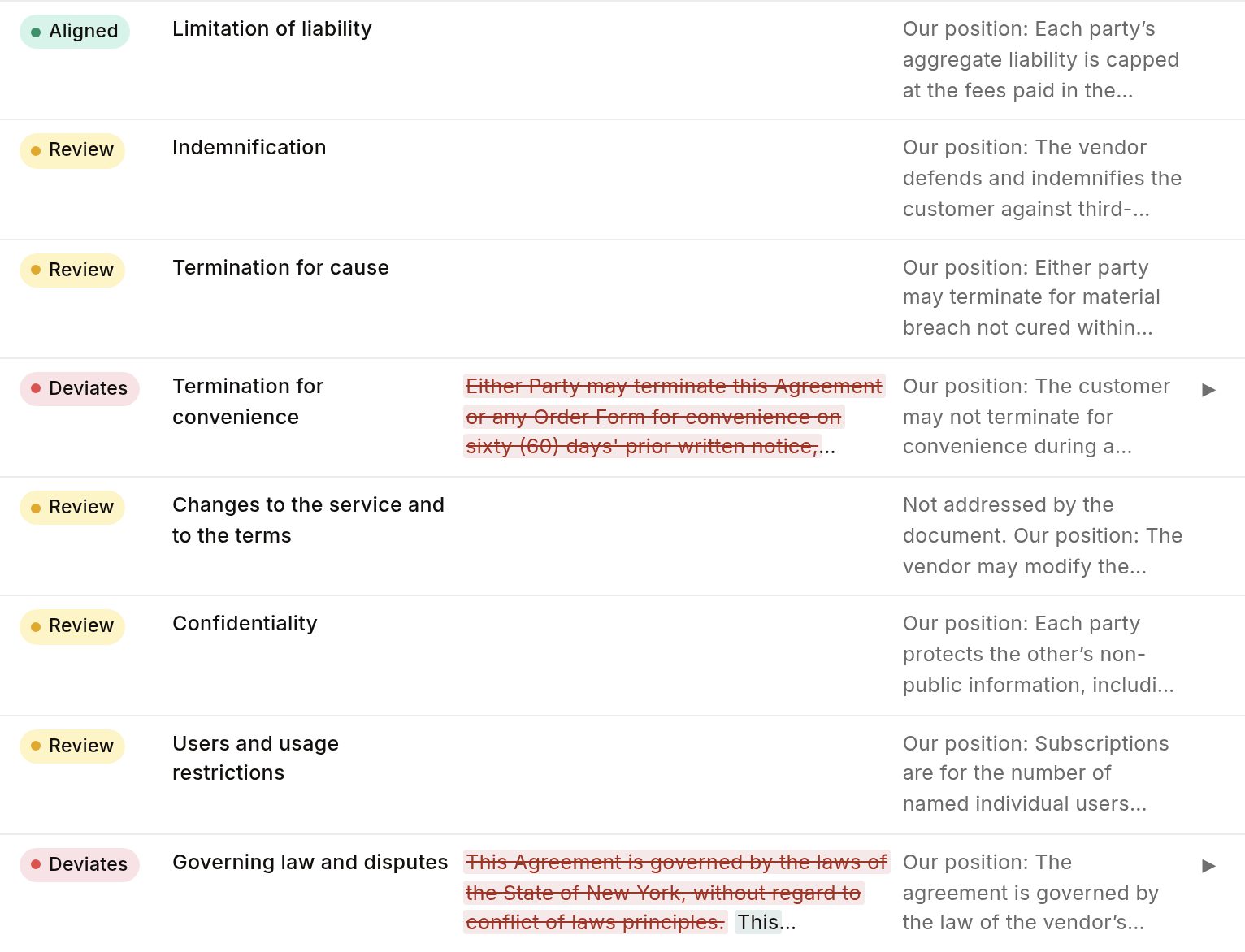
A playbook review on a demonstration matter: eight rules of a vendor-side SaaS playbook down the side, each with its verdict, Aligned, Review or Deviates, the firm's position beside it, and on the rows that deviate the clause struck through and redrafted.
  • Aligned, Review or DeviatesEach rule of your playbook gets a verdict, Aligned, Review or Deviates, with your position beside it.
  • Deviations come back redraftedWhere the paper deviates from your position, the clause comes back redrafted to it, ready to apply in the document.
  • Not addressed is said, not guessedA rule the document never addresses is reported as not addressed, never folded into a false Deviates.

The fix lands in Word as a tracked change.

Add a proposed change and it lands in the contract as a tracked change. Accept or reject each one.
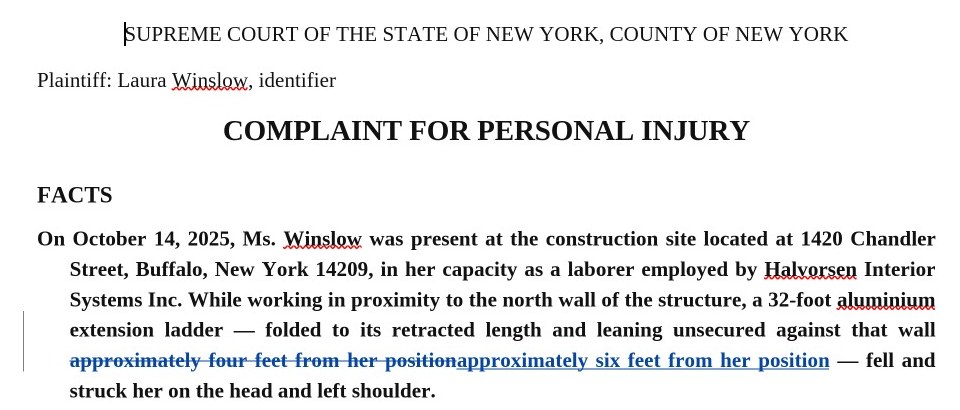
A complaint open in Word on a demonstration firm's letterhead, with one proposed change shown as a tracked change: the old wording struck through, the new wording inserted.
  • One fix or allA finding's proposed change is applied on its own or all at once, as tracked changes.
  • Native trackingThe add-in writes them with tracking on, so each one is individually acceptable in Word.
  • Nothing sent without youNothing an agent produces is sent by it; the card is where a lawyer decides.

One question across every contract in the deal.

Seven customer agreements on a demonstration matter, one question each: does a change of control need consent? Answered in a column, every cell cited to its clause, and a value not found marked not found.
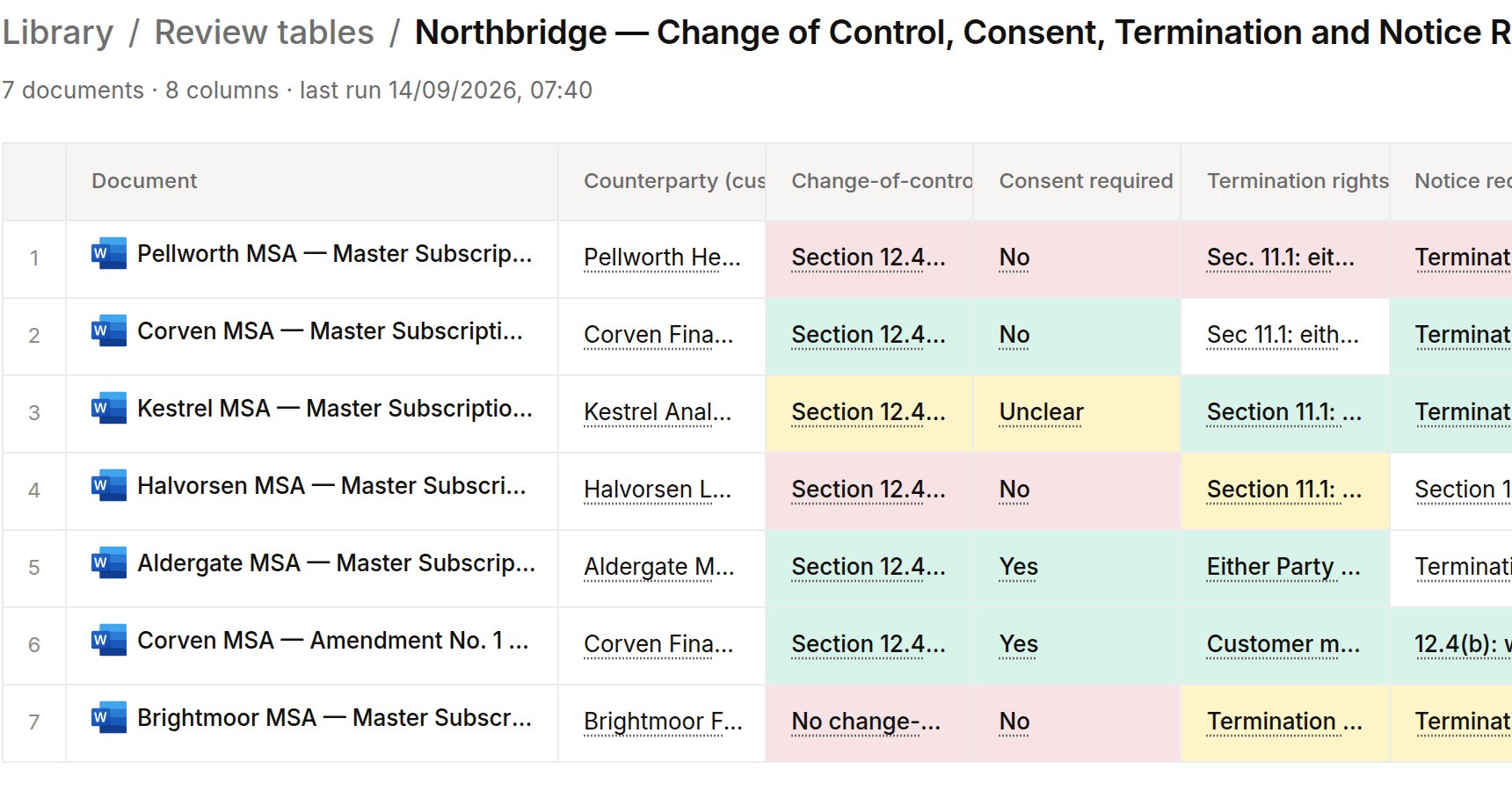
A review table on a demonstration matter: seven customer agreements down the side, change of control, consent required and termination rights across the top, each cell answered and colored.
  • Columns in your wordsPropose the columns in plain language and run them across the set.
  • Not found is markedA value the documents do not settle is marked not found, never invented.
  • ExportExport the table.

Your own wording, not a template.

Your playbook holds your preferred position and your fallbacks, in your words. Your Standards hold your forms, learned from documents you have already written.
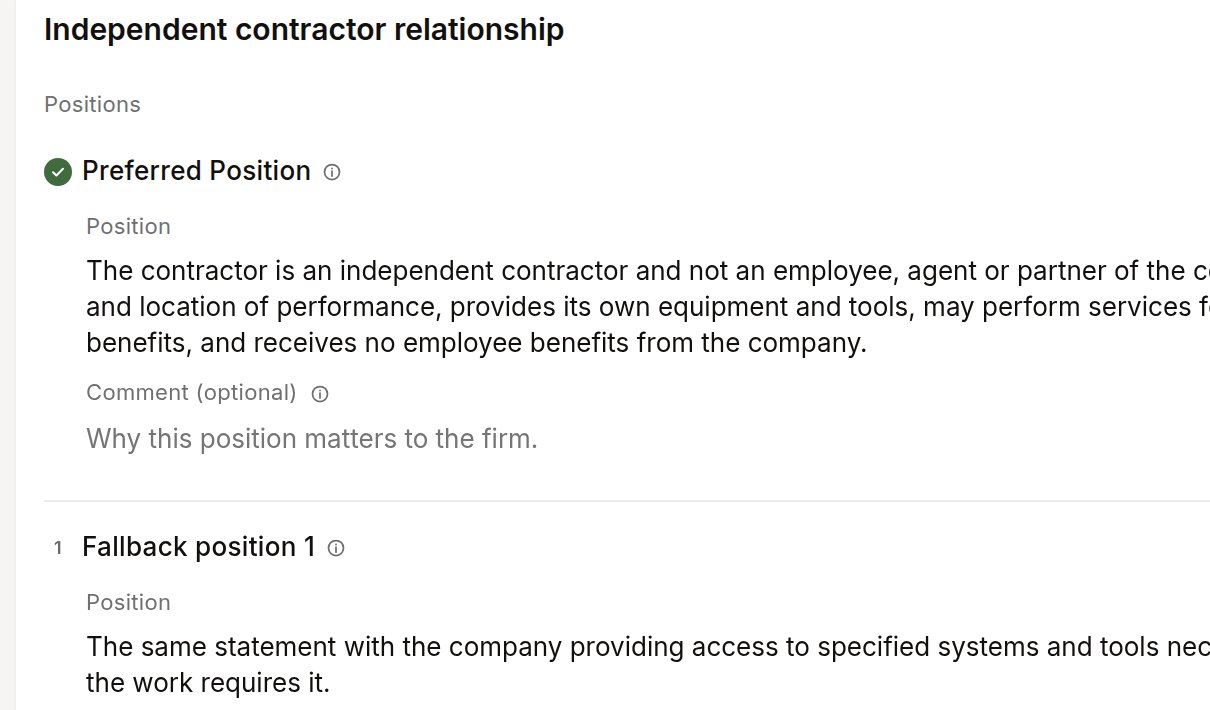
A playbook rule on a demonstration firm, Independent contractor relationship, with its preferred position written out in full and a fallback position beneath it.
  • Playbooks with positionsA preferred position and fallbacks per rule, drawn from your own paper.
  • StandardsYour own form of a document, learned from one you have written, and every draft made from it since.
  • Agents do it againSave the work as an agent that runs on demand or on a trigger and stops at an approval card for you to decide.

Numbers we can stand behind, each one from the code.

Model vendors inside the product
1
Models trained on your documents
0
Product sentences on this page, each checked against the code
44

Security and controls, stated exactly.

There is no badge on this page. The security page says plainly what Volares holds and what stands in its place, and what stands in its place is in the code: one model vendor and no training on your documents, every read scoped to your firm, a record of actions your own people can read, and an approval card that waits for a lawyer.

Read the security posture
  • One model vendor, no training on your documentsDetails
  • Every read scoped to your firmDetails
  • An activity record your own people read and exportDetails
  • Tracked changes in Word, accepted one at a timeDetails
  • An approval card that waits for a lawyerDetails
  • The source behind every factDetails